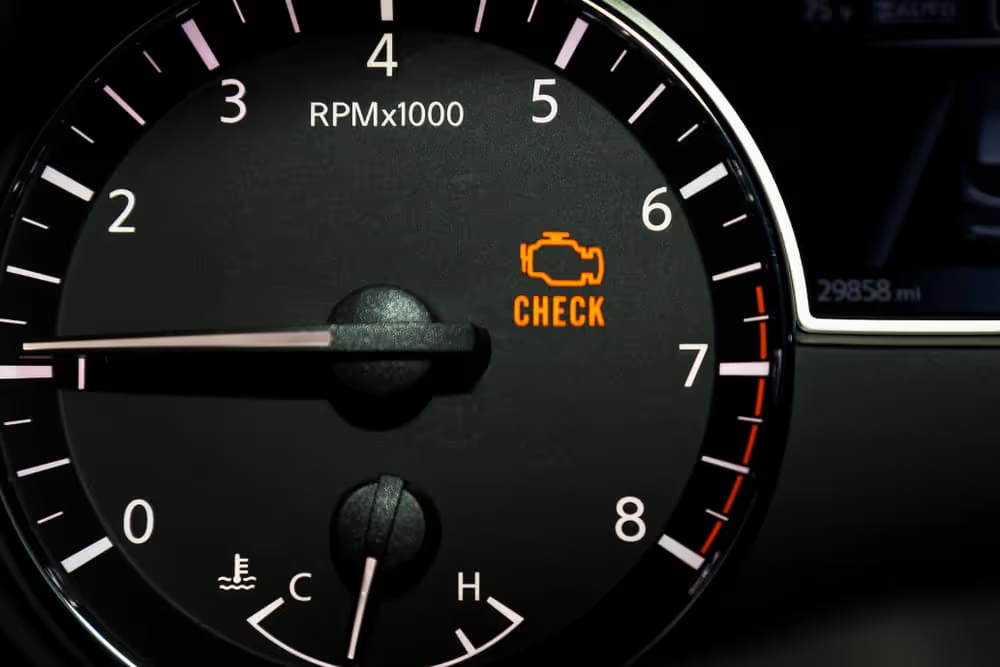
The check engine light is one of the most common dashboard warnings drivers see. Sometimes it points to a minor issue, while other times it can indicate a problem that should be inspected as soon as possible.
Understanding what the light means can help you decide what to do next and avoid turning a small problem into a more expensive repair.
Why Does the Check Engine Light Come On?
Your vehicle continuously monitors the engine, emissions system, and other important components. When the computer detects something outside its expected operating range, it may turn on the check engine light and store a diagnostic trouble code.
That code can help identify which system or component may need further inspection.
Common Causes of a Check Engine Light
Loose or Damaged Gas Cap
A loose, damaged, or missing gas cap can sometimes trigger the check engine light because it affects the vehicle’s fuel vapor system.
Faulty Oxygen Sensor
Oxygen sensors help your vehicle monitor the air-fuel mixture and emissions. A failing sensor can affect performance, fuel economy, and emissions.
Spark Plug or Ignition Problems
Worn spark plugs, ignition coils, or related components can cause engine misfires, rough running, and reduced performance.
Catalytic Converter Issues
A problem with the catalytic converter or related emissions components can also cause the warning light to appear.
Airflow or Fuel System Problems
Issues involving airflow sensors, vacuum leaks, fuel delivery, or other engine management components can also trigger diagnostic codes.
Solid vs. Flashing Check Engine Light
A solid check engine light usually means the vehicle has detected a problem that should be diagnosed, although the car may still appear to drive normally.
A flashing check engine light can indicate a more serious problem, such as a severe engine misfire. If the light is flashing, reduce driving and have the vehicle inspected as soon as possible.
Can You Keep Driving?
If the light is solid and the vehicle is running normally, you may be able to continue driving for a short period while arranging a diagnosis.
If you notice loss of power, unusual noises, heavy shaking, overheating, smoke, or a flashing warning light, stop driving when it is safe to do so and have the vehicle inspected.
Use a Code Reader to Learn More
An OBD-II code reader or scanner can connect to your vehicle and retrieve stored diagnostic trouble codes.
These codes can help narrow down the cause of the warning light, but they do not always identify the exact failed component. Further testing may still be necessary before replacing any parts.
Don’t Ignore the Warning
A check engine light does not always mean something serious is wrong, but it should not be ignored. Diagnosing the issue early can help prevent additional damage and unnecessary repair costs.
At AutoWeco, you can find code readers, diagnostic tools, replacement parts, and automotive essentials to help you better understand and maintain your vehicle.